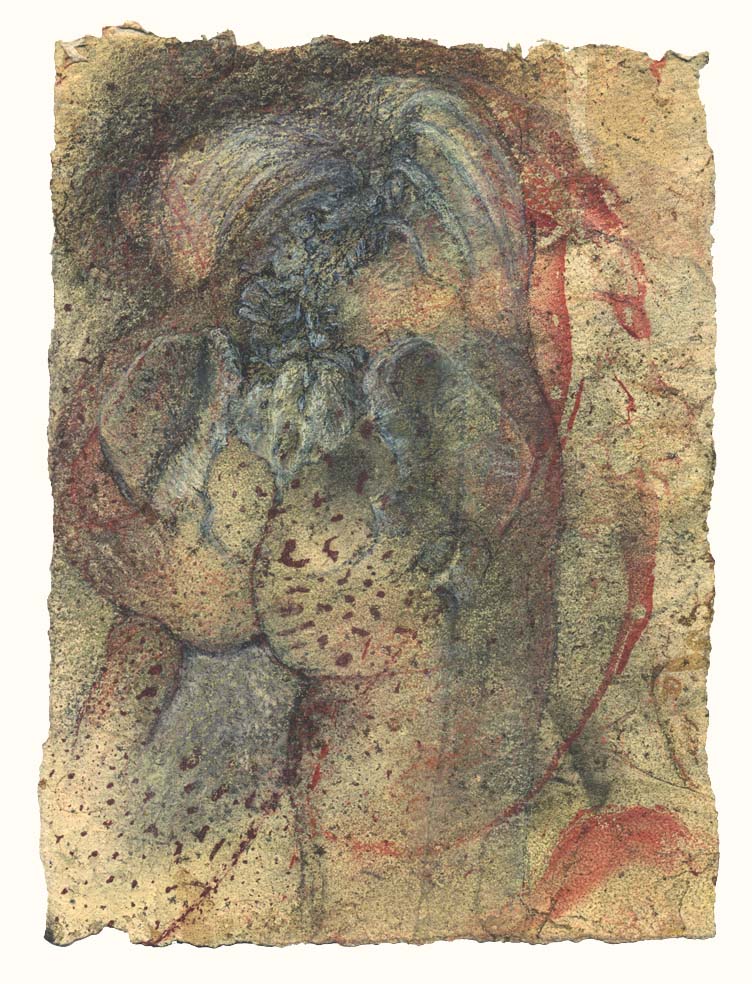
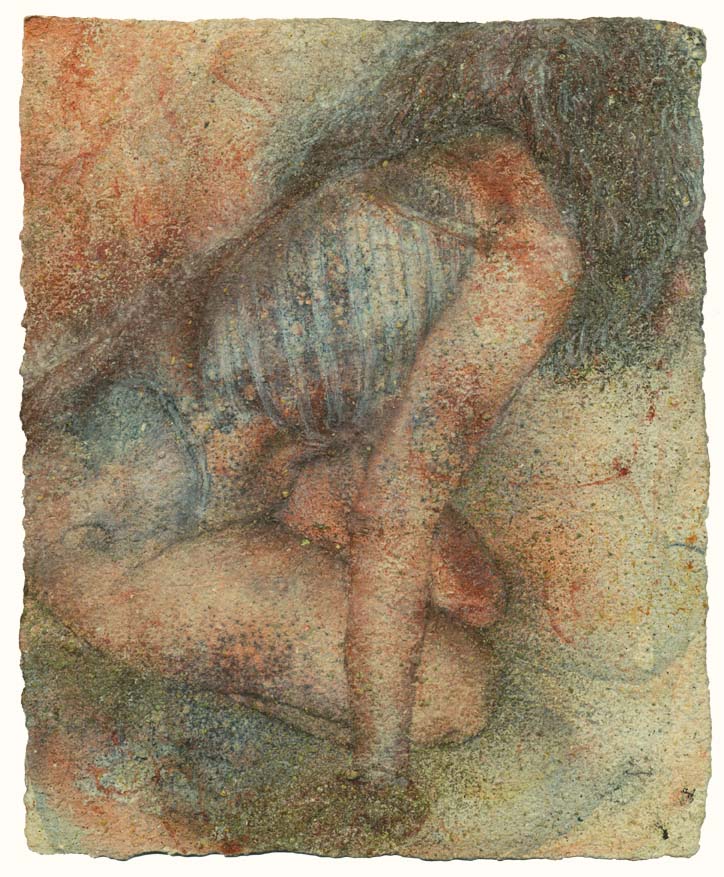
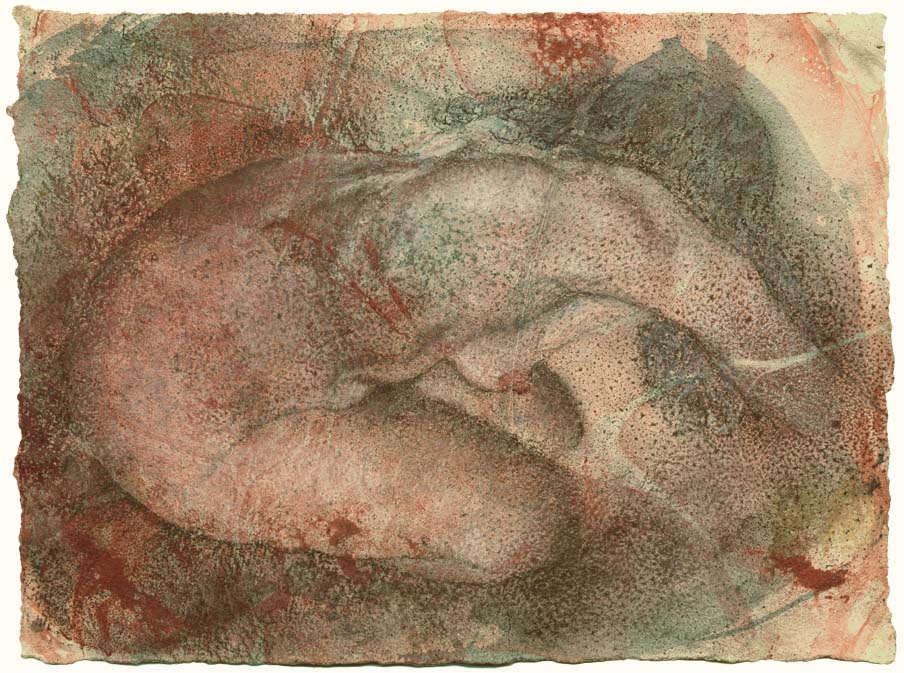
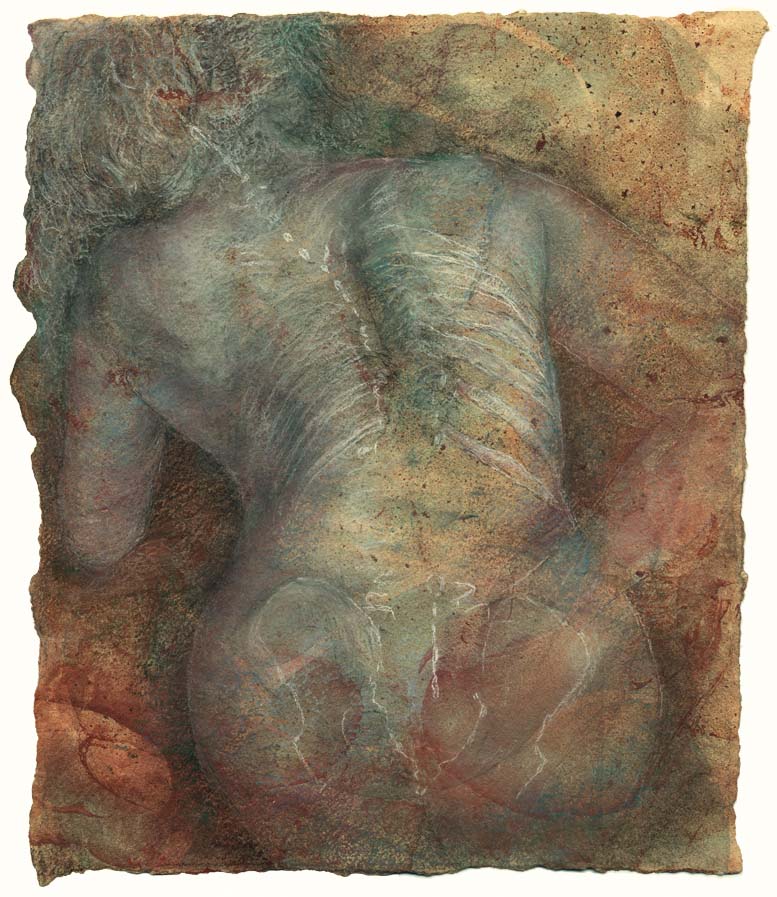
Spinal surgery and a year in a full-body plaster cast, at age thirteen, was a life-defining experience. Twenty years later, the uneven pressures of gravity, bearing down on my vulnerable spine and constricted rib cage, brought pain and disability into my life, and making art became a compelling need. I began exploring my own body and its unusual anatomy, from the inside out – a quest that has engaged me ever since.
With its complicated rotational dynamics, scoliosis is fundamentally visual – all about spatial relationships, asymmetry, and balance – which makes it a great subject for art.
Scroll down or click here to read The story behind the art

The story behind the art

My spinal curvature was diagnosed in childhood, and I had to have surgery, and live for a year in a full-body plaster cast, when I was thirteen. This was a life-defining experience, of constriction, repression, many hard things. It also deepened my sense of empathy and made me aware of how much is hidden under the surface of the selves we present to the world.
For the next twenty years, I lived my life, knowing that scoliosis would always be part of me but sure that my problems with it were in the past. But it turned out that the uneven pressures of gravity had been bearing down on my vulnerable spine and constricted rib cage all the while, and eventually brought pain and disability into my life.

In an ‘aha moment’ in the early 1990s, an idea came to me: to conduct an in-depth artistic investigation of my own body and its unusual anatomy.
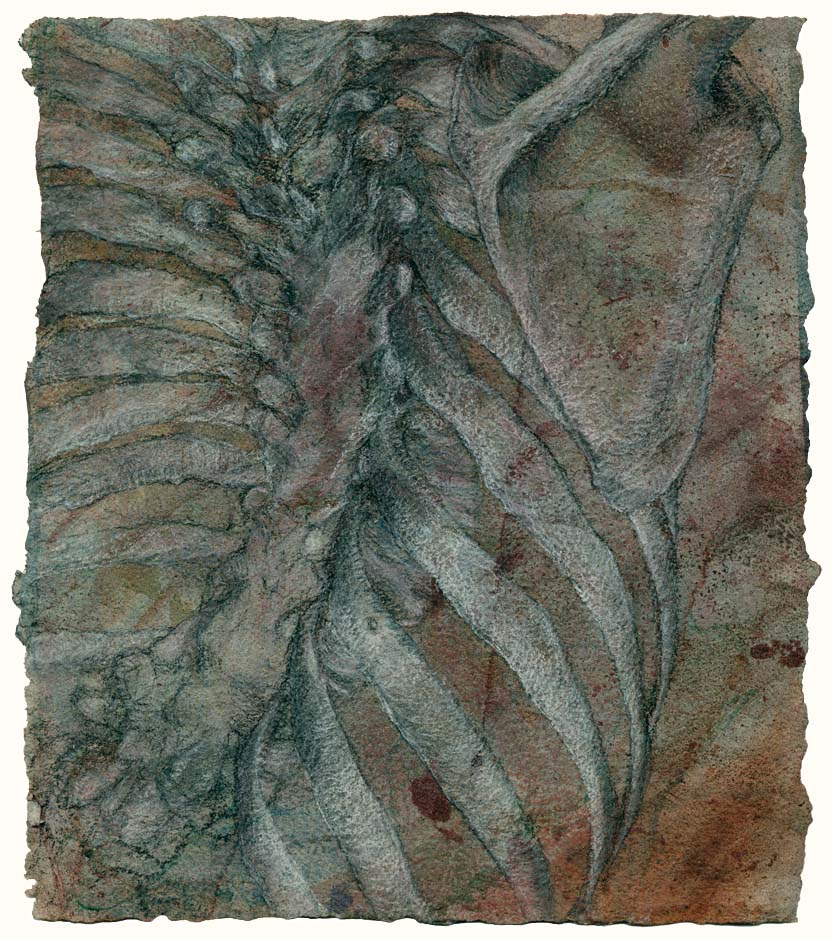
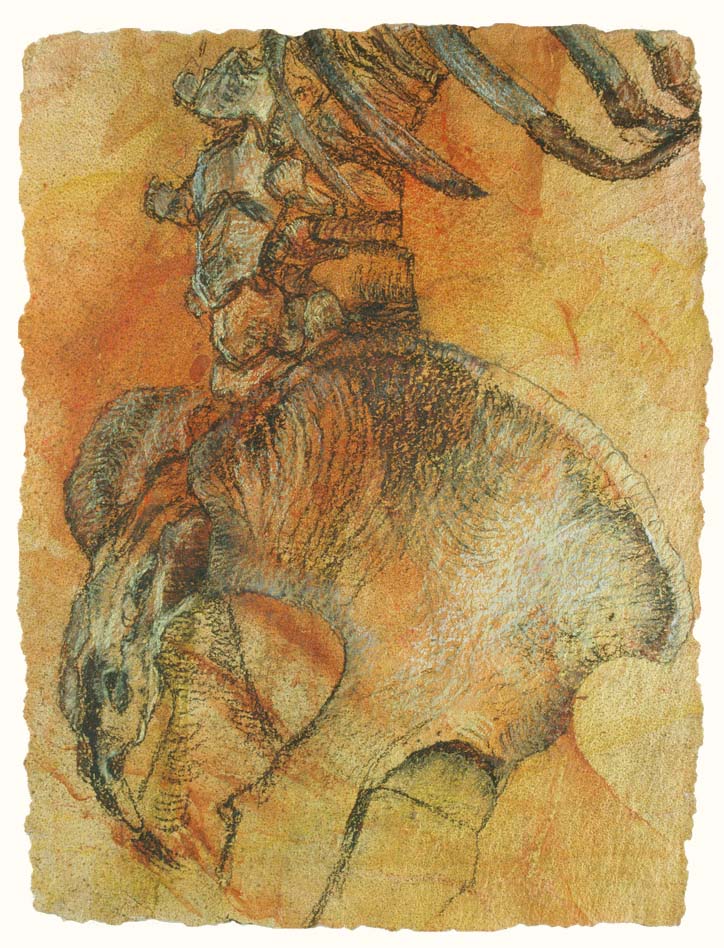
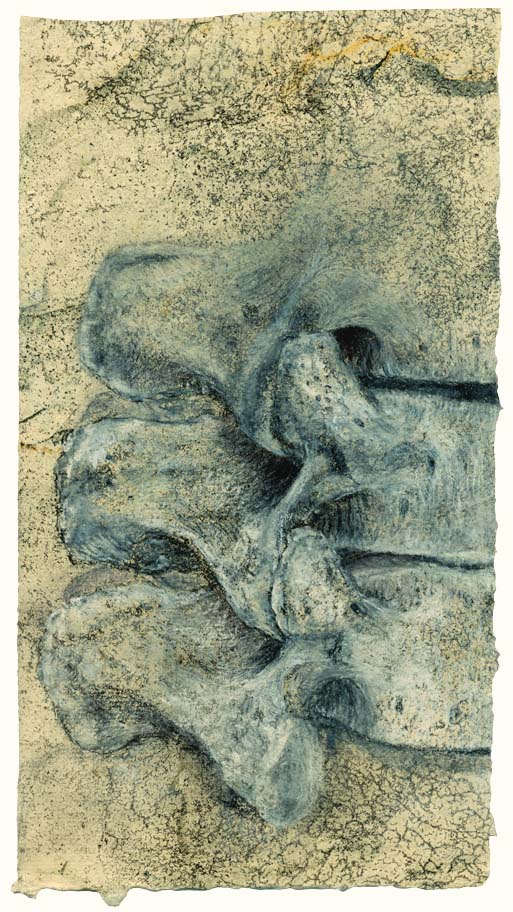
With all its limitations, my body was still limber and flexible, expressive and attuned to interesting relationships with space, light, another body. Through my work with anatomy-based movement practitioners, especially master dance anatomist Irene Dowd, I became more aware of my proprioceptive, inner body sensors and signals, and more centered and balanced in my body. We began drawing together from Irene’s real human skeleton, and I found myself fascinated by the intricate beauty of bones.
Translating my inner body awareness into drawing, I could create visual images in space the way a dancer uses choreography … evoking that consciousness of the body that often lies just slightly below the level of articulated thought.

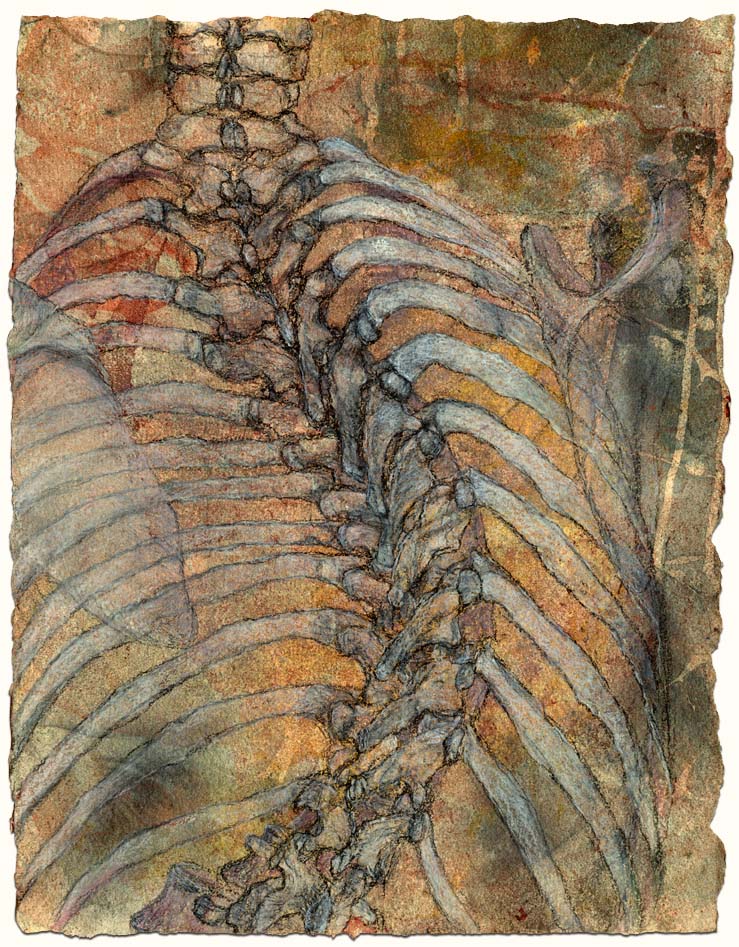
Over a lifetime of x-rays, I had always been intrigued by these shadowy, mysterious pictures of my own inner body – but they seemed to belong more to the doctors than to me. Putting my x-rays up on my own lightbox, and converting their flattened, black-and-white shapes back into three-dimensionality, I began to feel whole again. It was powerful to draw my scar, my deformity – giving myself permission to explore territory I had long kept private, and to some extent even hidden from myself.
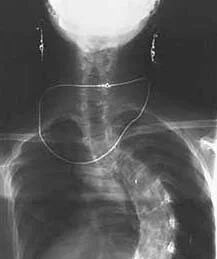

my 3D spiral CT scan
I began to collaborate with orthopedic surgeons and radiologists to have medical images made for the purpose of art. It was exciting to art-direct my first x-ray! Keeping my earrings and necklace on (instead of being made to take off everything metal, as usually happens) made me feel triumphant, and made the x-ray image more personal. Working with doctors as an artist and fellow professional, I felt respected and seen in a way I never had as a patient.
Soon I was searching for a more three-dimensional medical imaging technology, and in 2000, thanks to Dr. Andrew Litt at NYU School of Medicine, I was able to have a cutting-edge spiral CT scan with 3D volume rendering. It was a stunning experience to see my skeleton appear in 3D on a computer screen, after all the years I had spent trying to visualize it. In 2008, when the technology could capture an even greater level of detail, I had a second spiral CT scan. I’ve been using those scan images ever since to inform my visual explorations of my inner spaces.

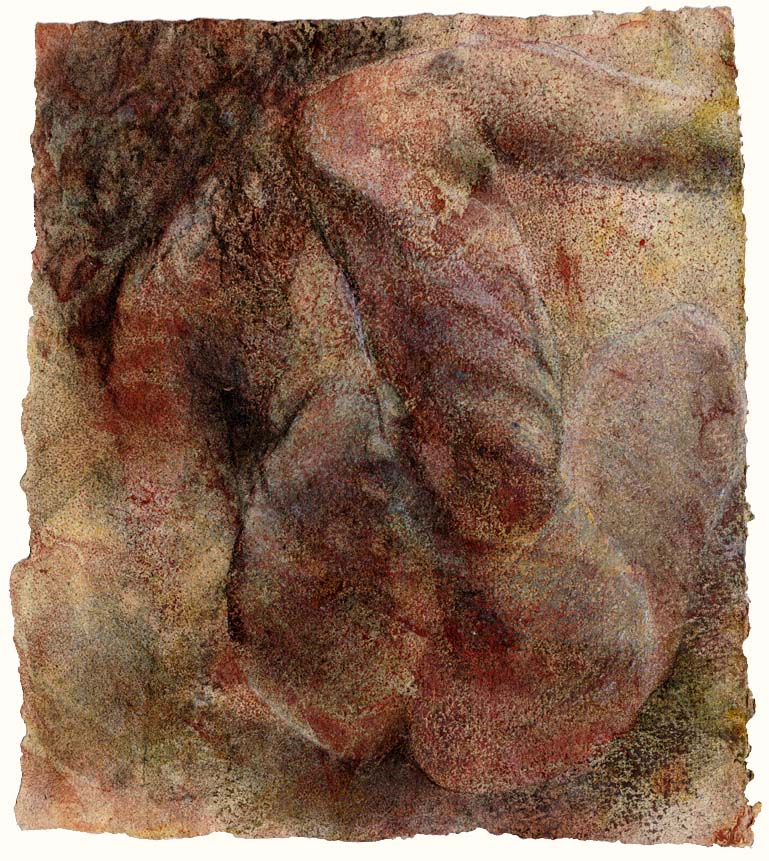
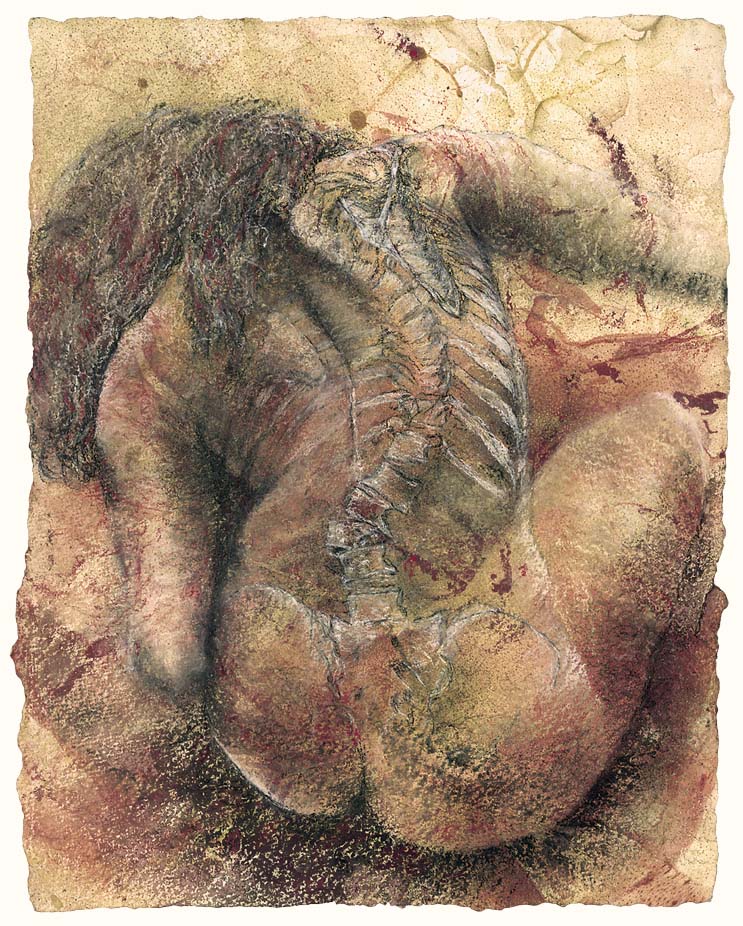
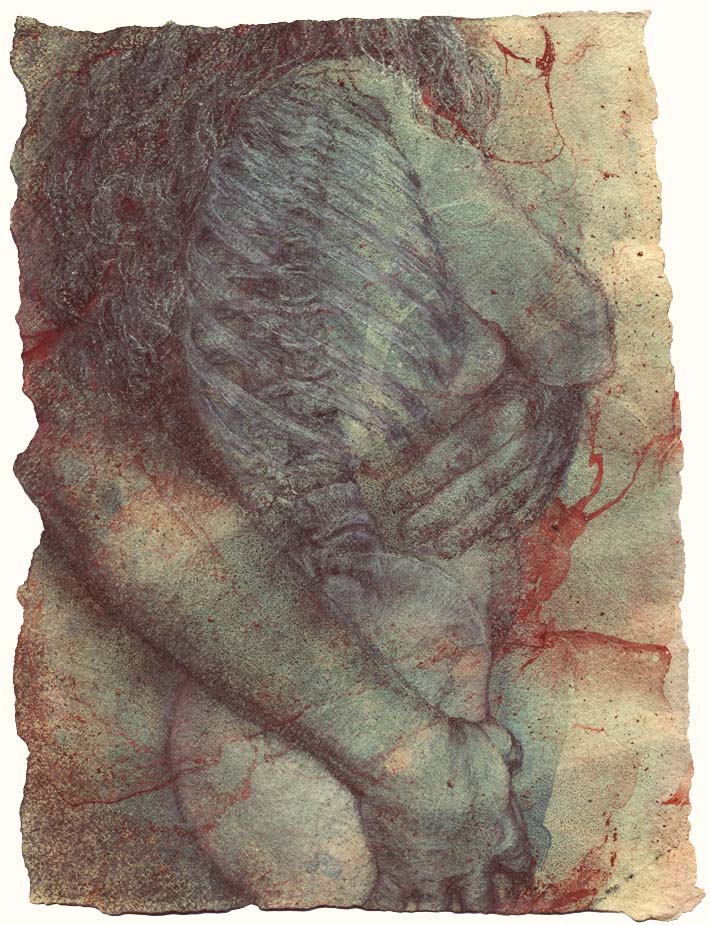
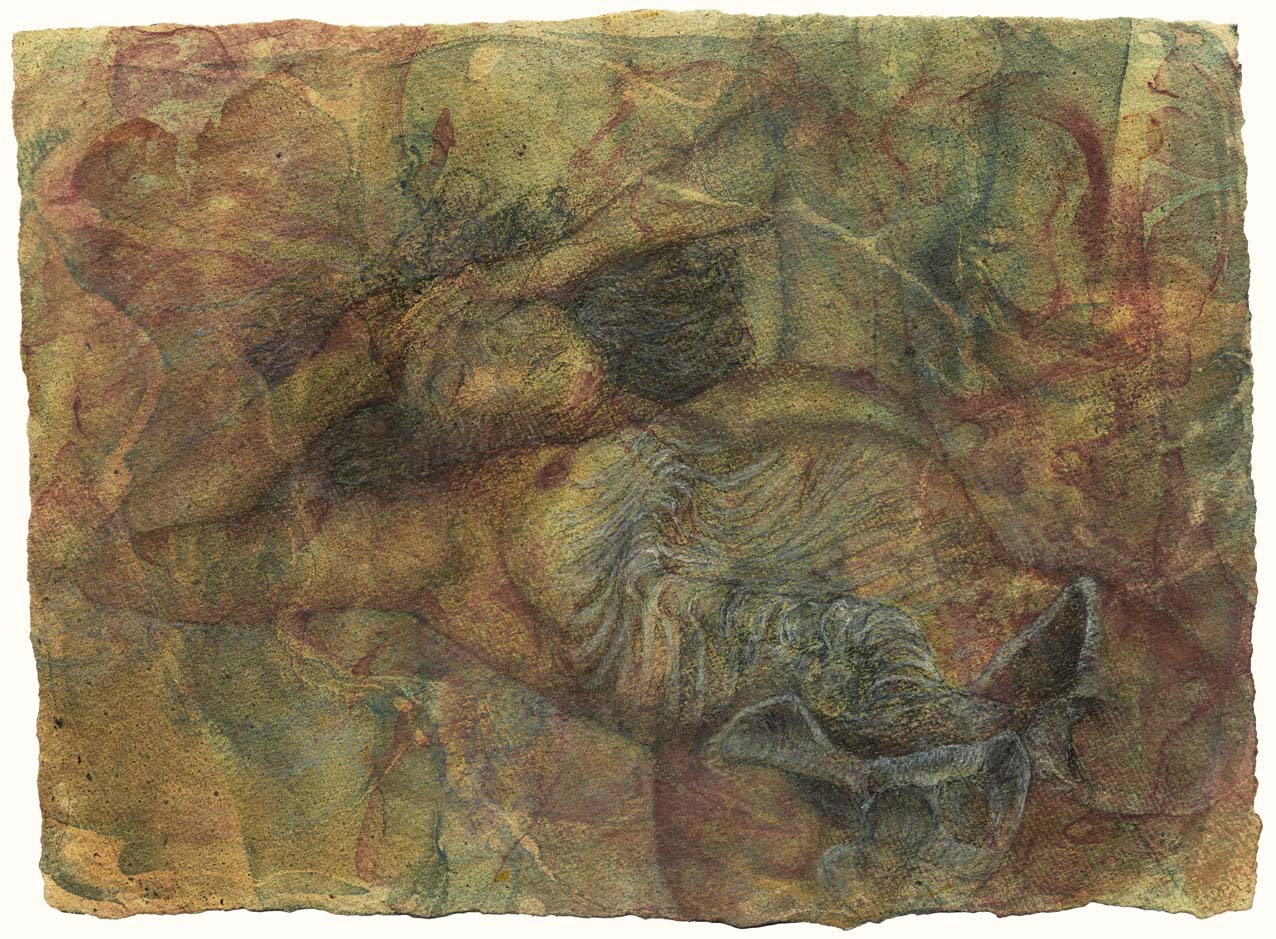
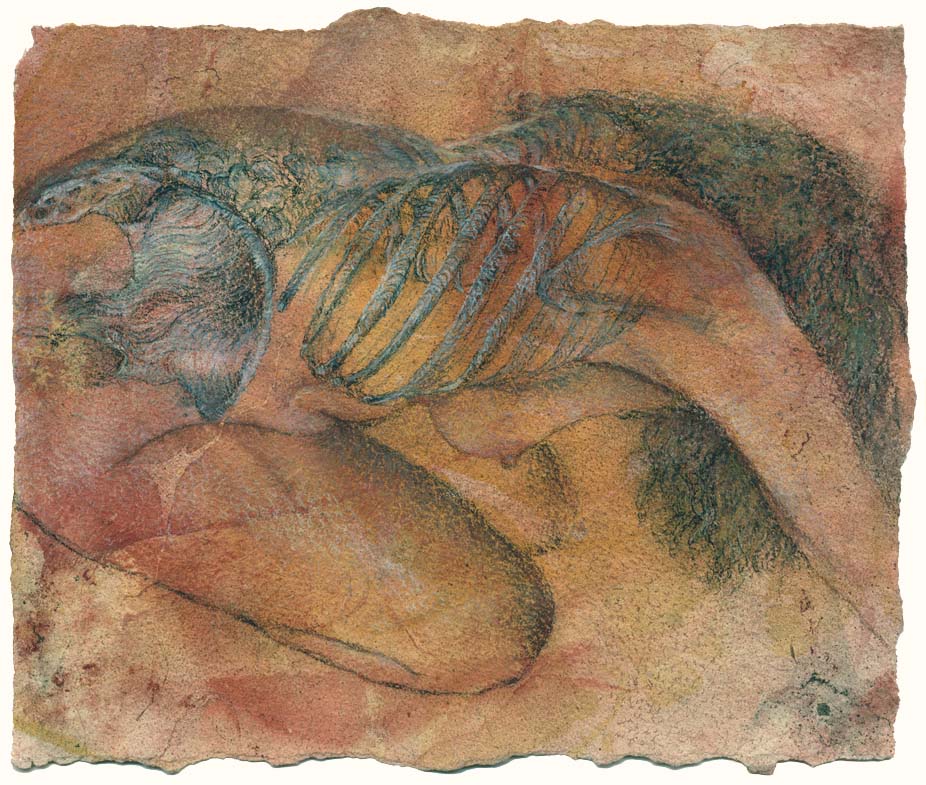
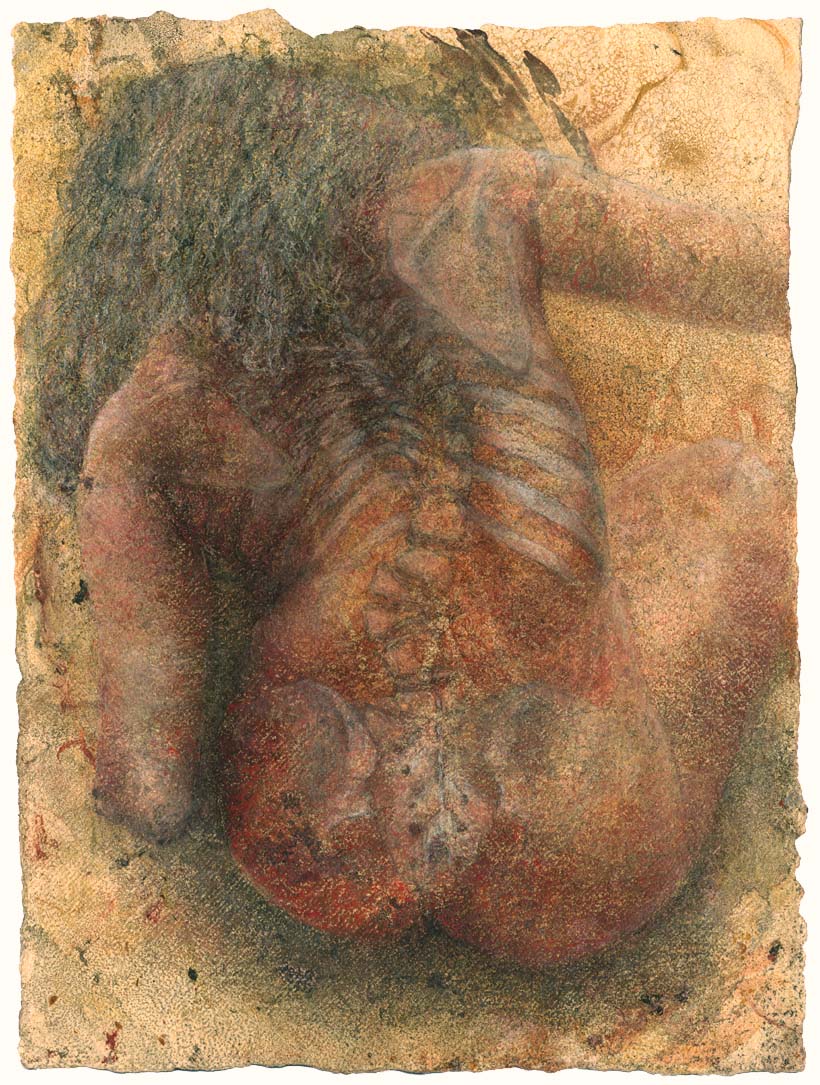
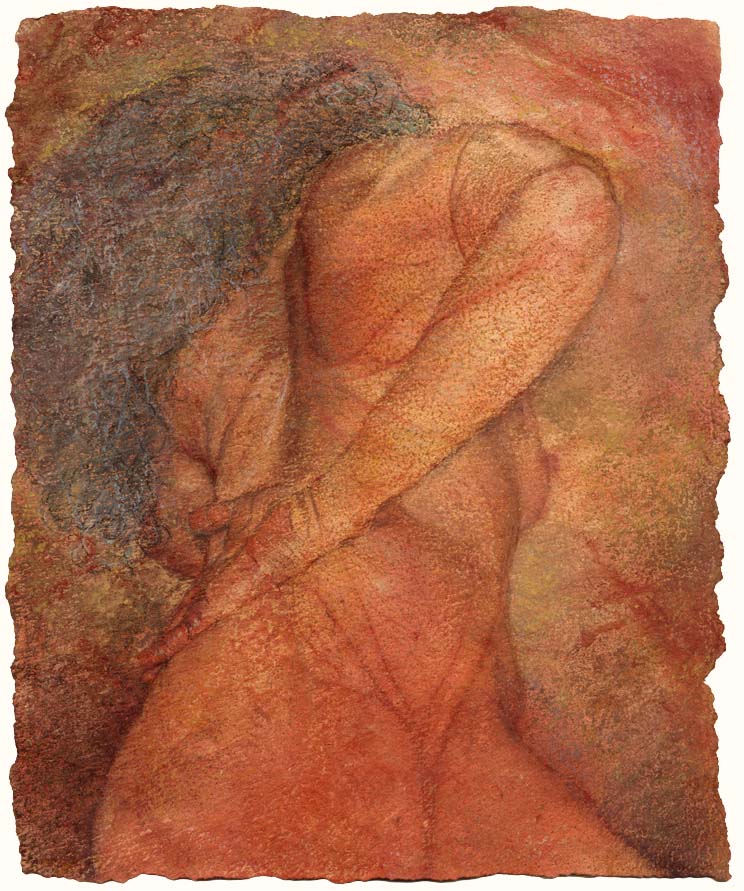
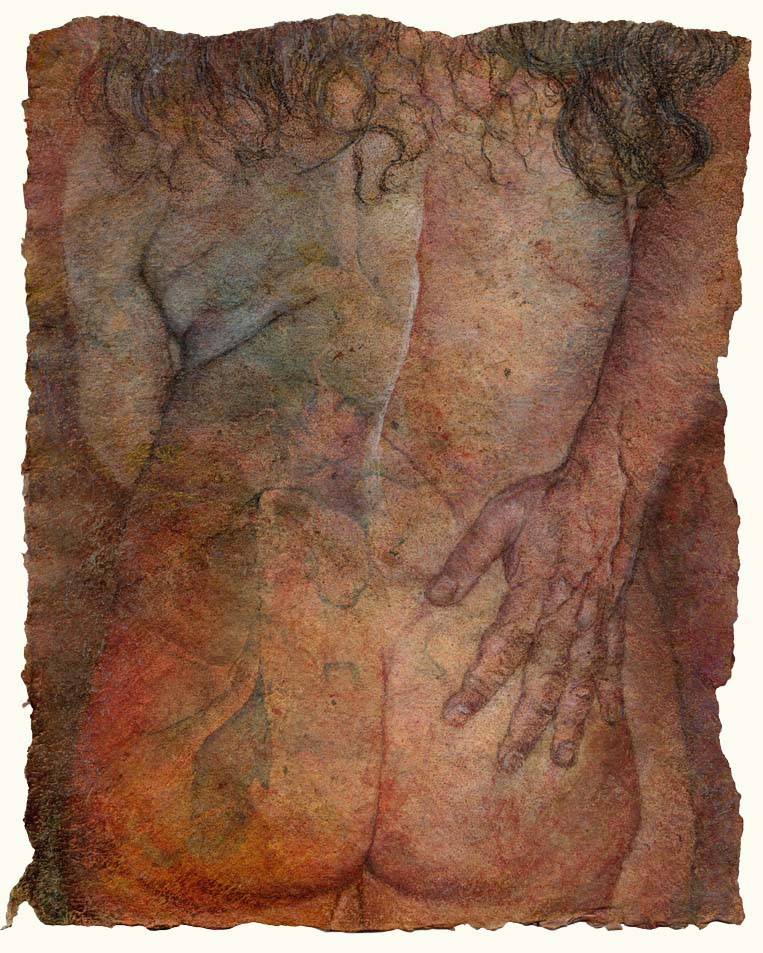
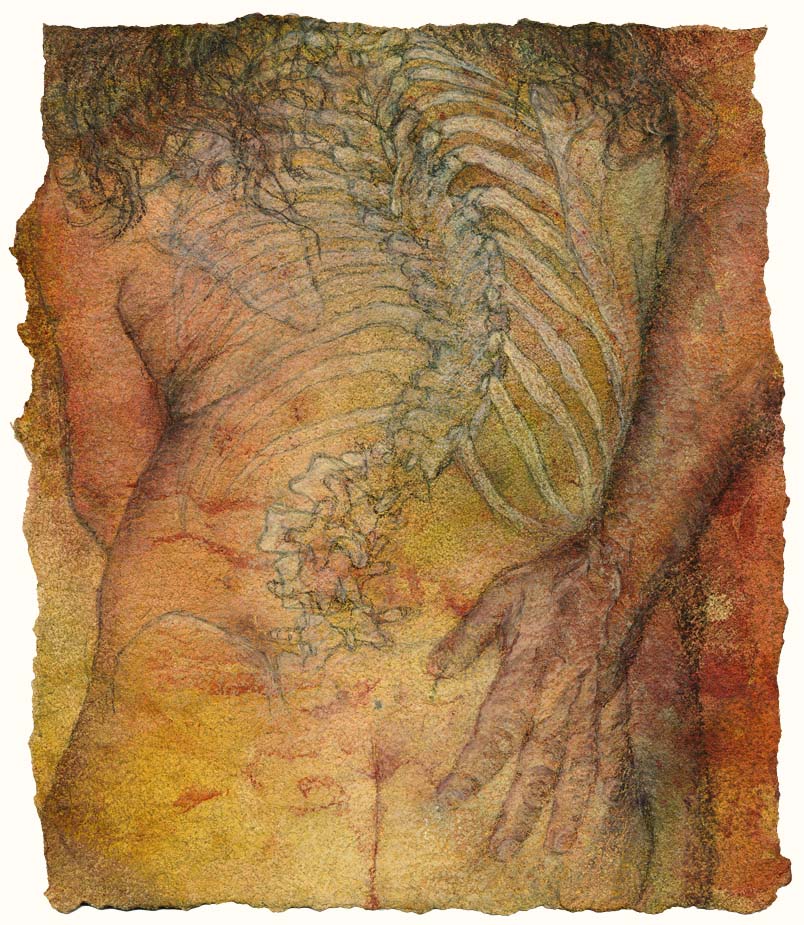
I drew my figure from the outside first, in poses that came from my own vocabulary of movement. Then I made studies of the skeleton in that pose, using my 3D scan films and the human skeleton as references. Once I had come to know the pose from inside and out, I put the elements together in a drawing that made the skeleton visible through the transparent surface of the skin.
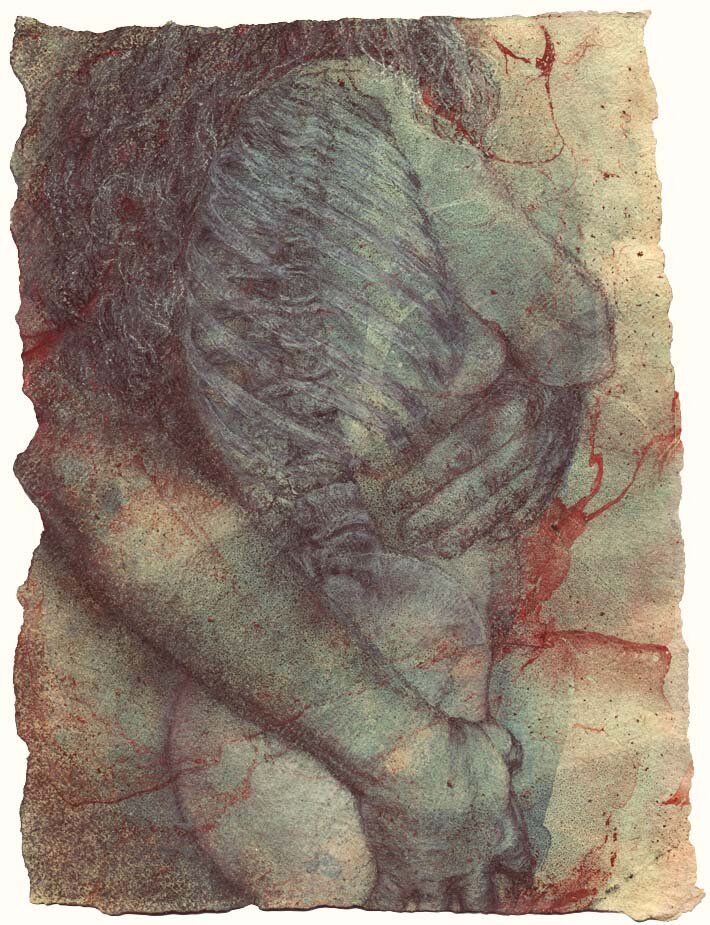
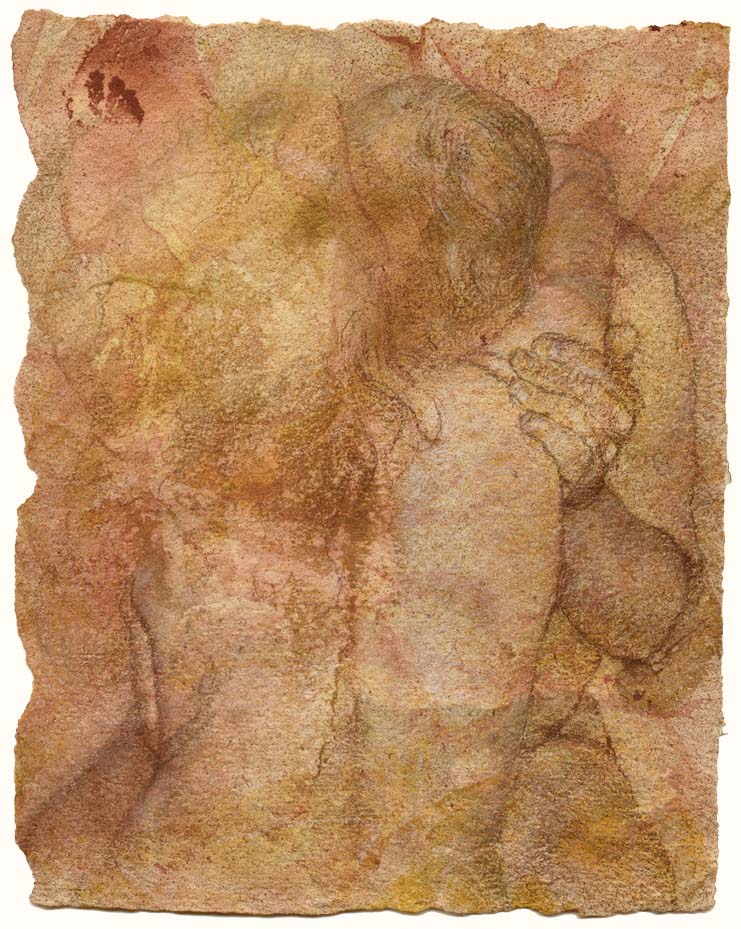
Drawing myself with my skeleton visible, in a lover’s embrace, felt healing: an acceptance from the person whose body I felt closest to. And the hands also signaled a growing reconciliation with those who had touched and gazed: the doctors who hurt me as they tried to heal me.
Back to Galleries overview